Primacoustic
Acoustic Treatment for Corporate Spaces
Is it possible that poor acoustics in your company or corporate spaces could be impacting your business’ bottom line? Research shows that 86% of employees and executives cite poor communication as a primary reason for lower productivity, and that a good communications environment can increase productivity by as much as 25%. If you want to create a good communications environment and capitalize on that increased productivity, then look no further than Primacoustic and our quality office acoustic panels.
1. Boardrooms & Executive Meeting Rooms
Clearer speech, better call quality, and a more professional environment
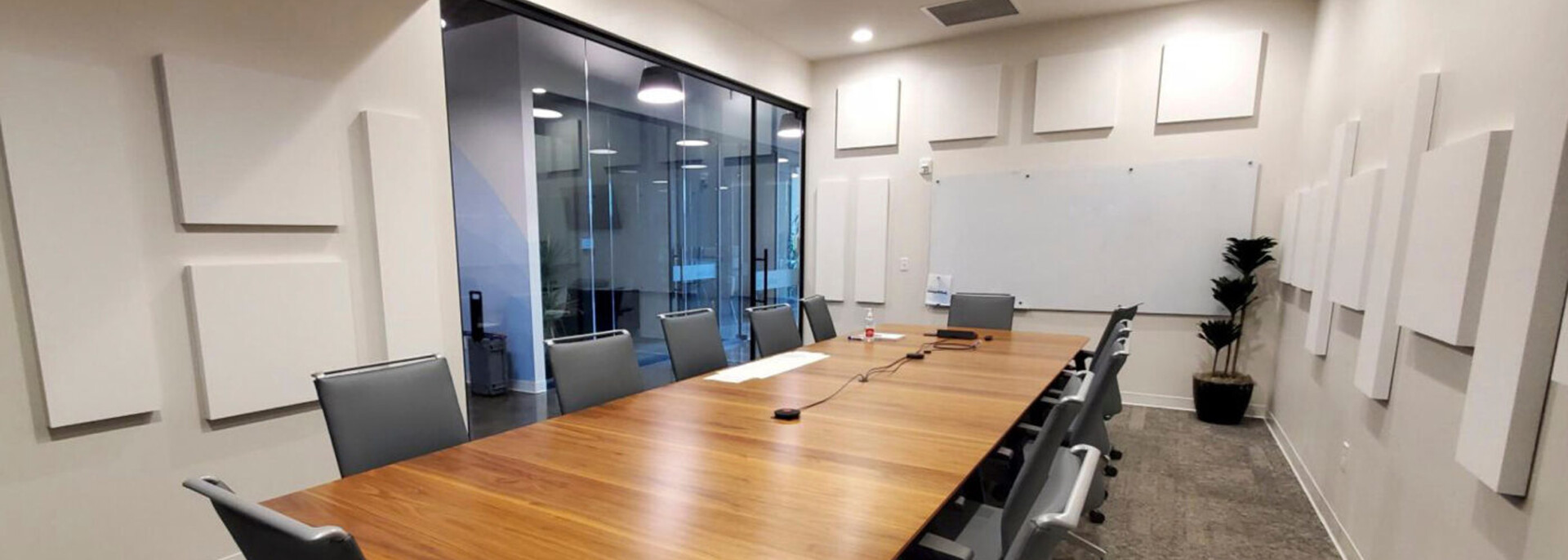
In boardrooms and executive meeting rooms, long conference tables, glass walls, and plasterboard surfaces often create strong reflections and long reverberation times, which can make speech sound muddy and cause excessive echo for remote participants.
To address these issues, the primary acoustic goals are to improve speech intelligibility for both in-room and video conference participants, and to reduce echo and flutter reflections between the walls and ceiling.
Solutions:
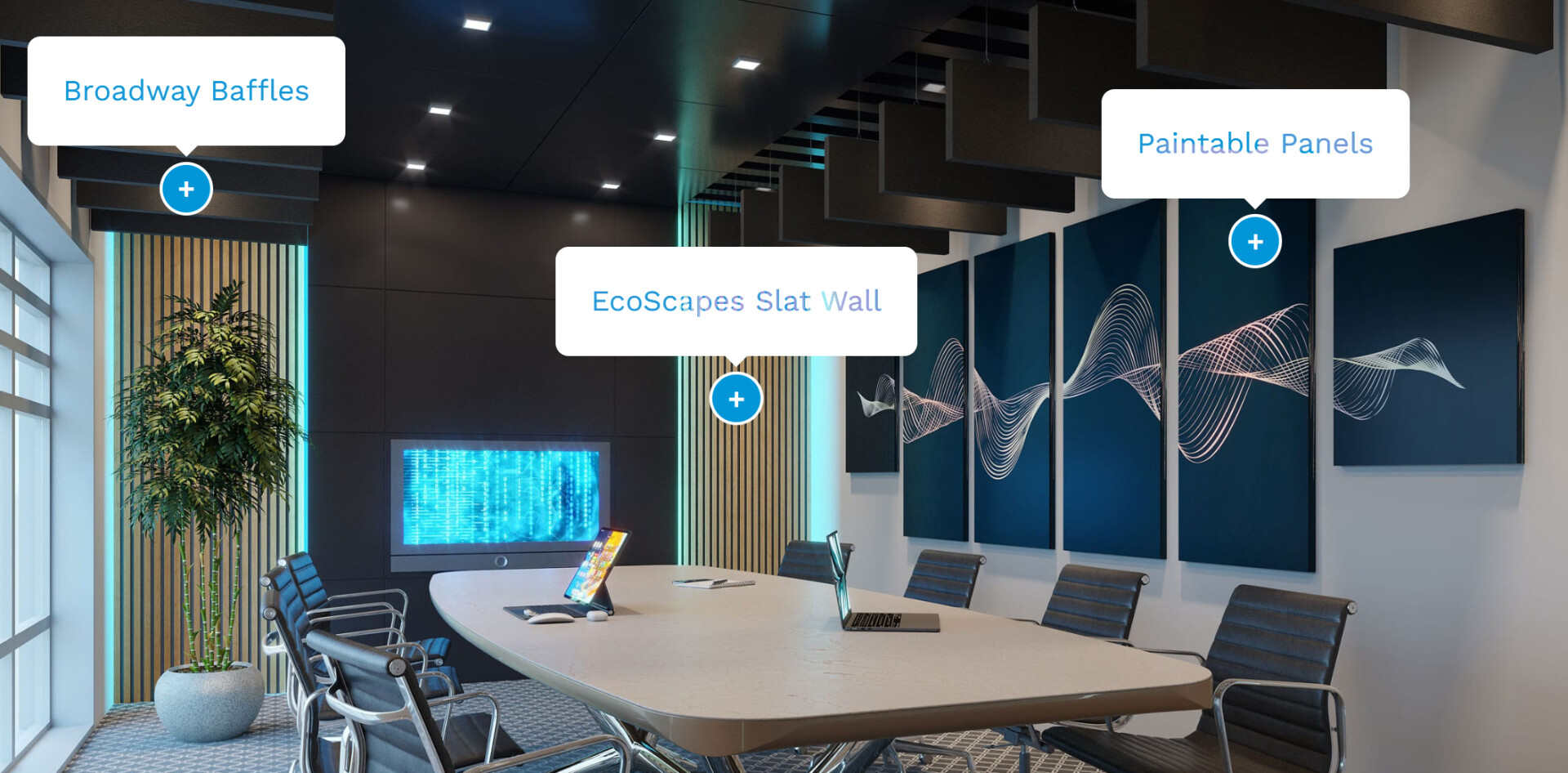
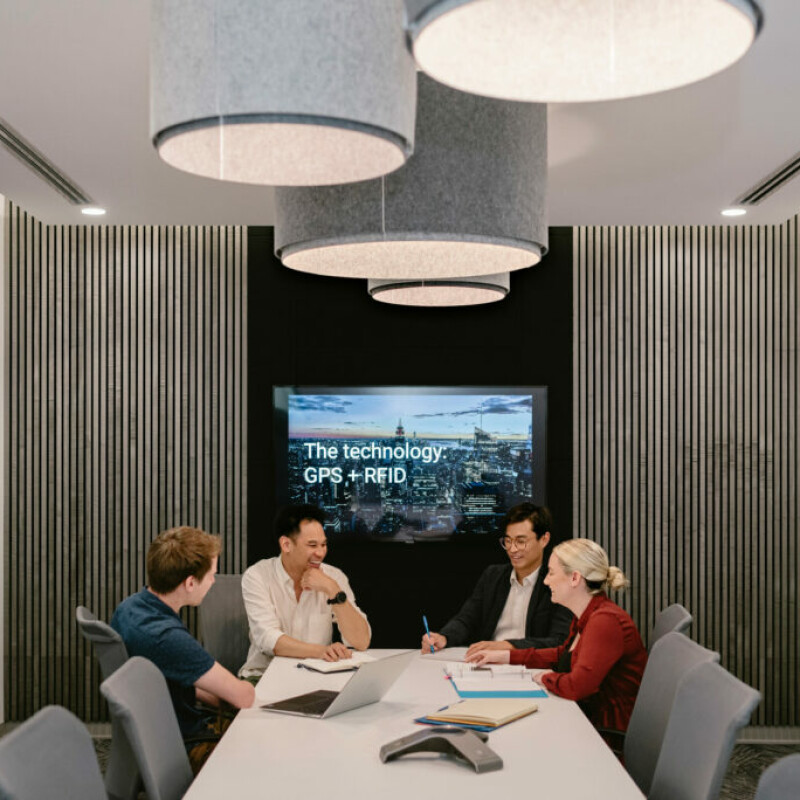
- Wall Panels: Install broadband absorption panels, such as Primacoustic Broadway panels, on side and rear walls to capture sound reflections and improve speech clarity.
- Ceiling Clouds: Hang absorptive panels, such as StratoTile or Nimbus Cloud, above the meeting table to control ceiling reflections and reduce reverberation.
- Bass Traps: In smaller enclosed rooms where low-frequency build-up is common, corner-mounted bass traps help to balance the overall sound profile.
Result:
Clearer speech, better microphone pickup for Teams or Zoom calls, and a more professional, comfortable acoustic environment that supports productive meetings and reduces audio fatigue for both in-room and remote participants.
2. Teams Rooms / Huddle Spaces / Focus Pods
Focused audio for clearer calls and more productive meetings
In Teams rooms, huddle spaces, and focus pods, small glass pods or semi-enclosed areas often create noticeable acoustic challenges. Hard surfaces such as glass, walls, and floors reflect sound, which can amplify voices and make conversations feel harsh or uneven.
This also leads to spillover noise, disturbing adjacent work areas and reducing overall focus. Additionally, video calls in these spaces often sound “boomy” or “boxy,” making speech less clear and communication more difficult for both in-room and remote participants.
Solutions:
- Compact Wall Panels: Install 25mm or 50mm thick absorptive panels strategically behind and beside participants to reduce reflections and improve clarity.
- Ceiling Clouds or Tiles: Lightweight absorbers can be integrated into suspended or drop ceilings to manage overhead reflections and reduce reverberation.
- Door/Glass Seals: Adding acoustic door strips or partial partitions helps contain sound within the pod, preventing noise transfer to surrounding areas.
Result:
A focused audio environment that enhances speech clarity during video calls and small meetings, reducing echo and background noise. This creates a more private, comfortable, and productive workspace for both users and nearby colleagues.
3. Open-Plan Offices
Reduced noise, better speech privacy, and a more focused office.
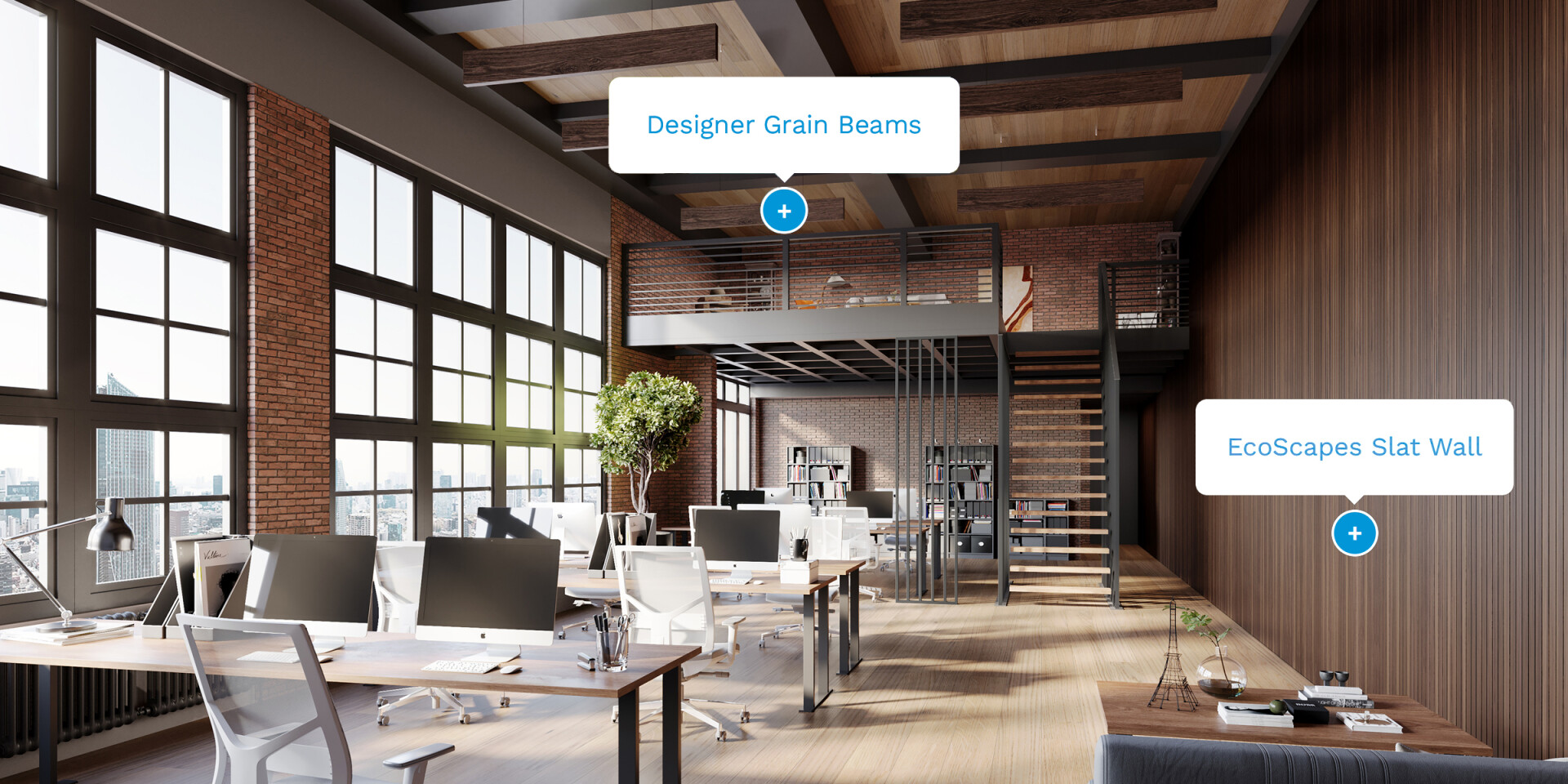
In open-plan offices, constant background chatter, ringing phones, and printer noise create a consistently noisy environment that can make concentration difficult for employees. The large, open layout allows sound to travel freely, causing overlapping conversations and reflections that make it hard to focus.
This often leads to “sound masking” or reverberation bloom, where speech becomes less intelligible and general noise levels increase, reducing overall productivity and creating a stressful work environment.
Solutions:
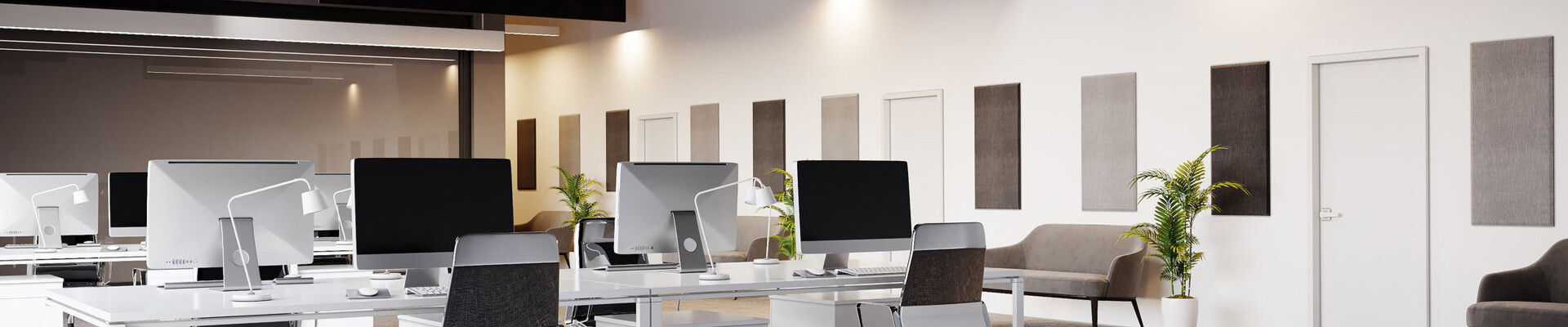
- Ceiling Baffles or Clouds: Suspended panels (such as Horizon, Cirrus, or Nimbus) help absorb sound across the open ceiling area while adding a visually dynamic design element.
- Desk-Height Partitions: Acoustic partitions between workstations absorb and block mid- to high-frequency sound, reducing speech transfer between colleagues.
- Wall Panels: Large-format decorative absorbers (such as Paintables or Broadway panels) control overall reverberation and add aesthetic appeal.
Result:
Noticeably reduced noise build-up, greater speech privacy between desks, and improved concentration across the office. Staff experience a calmer, more focused, and productive working environment.
4. Breakout Areas, Lounges, and Kitchens
Softer, more comfortable acoustics with controlled noise
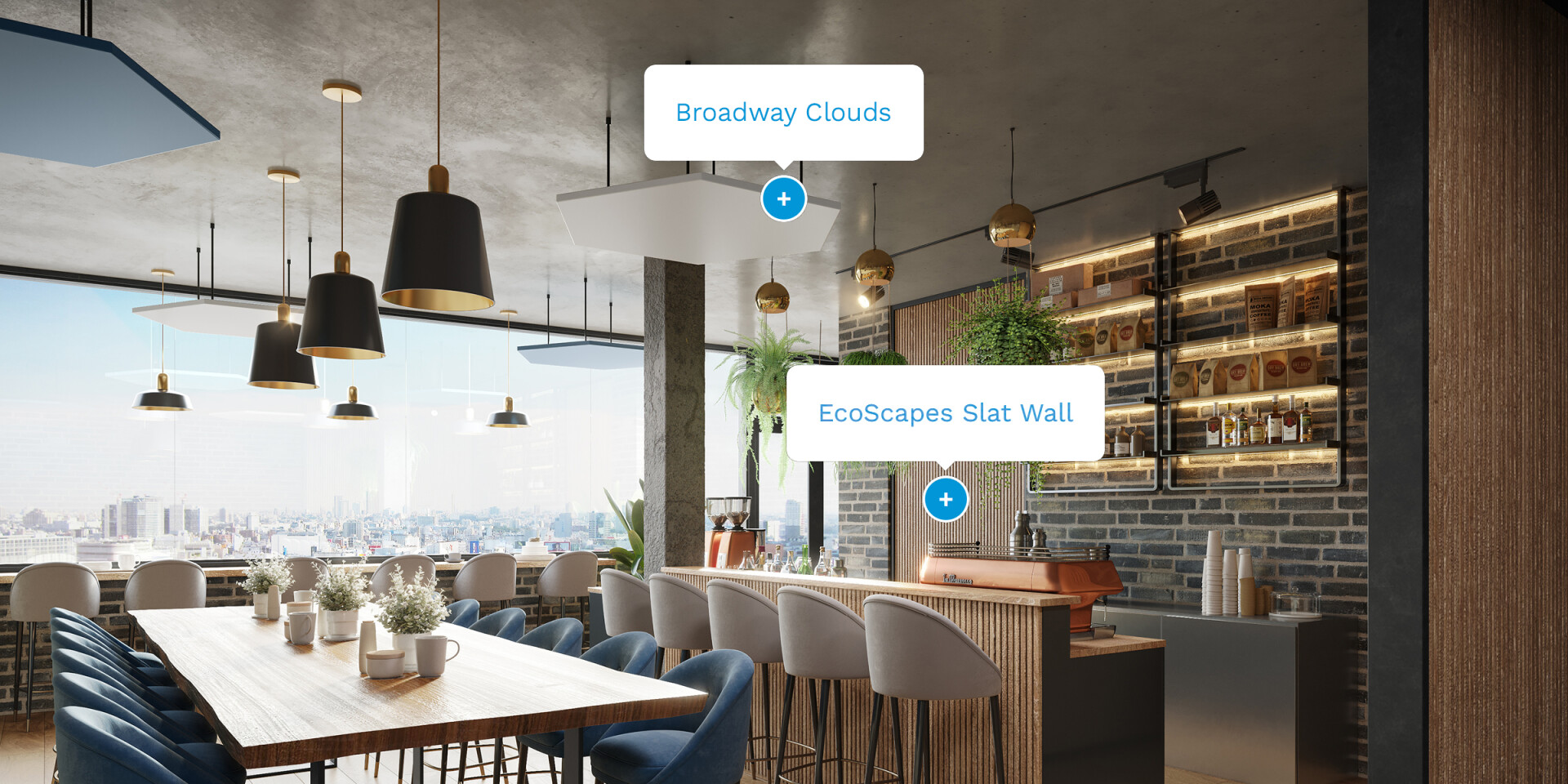
In breakout areas, lounges, and kitchens, hard surfaces such as tile, glass, and metal often create harsh echoes that make the space acoustically uncomfortable. Conversations, movement, and the use of kitchen appliances generate additional noise, which can easily carry into adjacent work areas and disrupt concentration.
The combination of reflective surfaces and open layouts often leads to a lively but uncontrolled acoustic environment, making it difficult for employees to relax or focus.
Solutions:
- Ceiling Clouds or Baffles: Decorative absorbers, such as Horizon Shapes, suspended from the ceiling, help reduce echo and add a creative design feature.
- Wall Panels: Art-wrapped or printed acoustic panels enhance sound absorption while aligning with company branding or colour schemes.
- Soft Furnishings: Combine wall and ceiling treatments with rugs, curtains, and fabric furniture to increase acoustic comfort and absorb mid-frequency noise.
Result:
A softer, more comfortable acoustic environment that encourages relaxed conversation and social interaction. Noise is better controlled, and sound transfer to nearby work areas is significantly reduced, helping maintain a pleasant office atmosphere.
5. Call Centres or Sales Floors
Lower stress, clearer calls, and higher productivity
In call centres or sales floors, multiple simultaneous conversations create a consistently noisy environment that can be highly distracting and quickly lead to employee fatigue. The open layout, combined with hard, reflective surfaces, allows sound to travel freely across the space, making it difficult for staff to concentrate or communicate effectively.
Noise levels often exceed comfortable thresholds, and the constant auditory stimulation can contribute to stress, errors, and reduced overall productivity if left unaddressed.
Solutions:
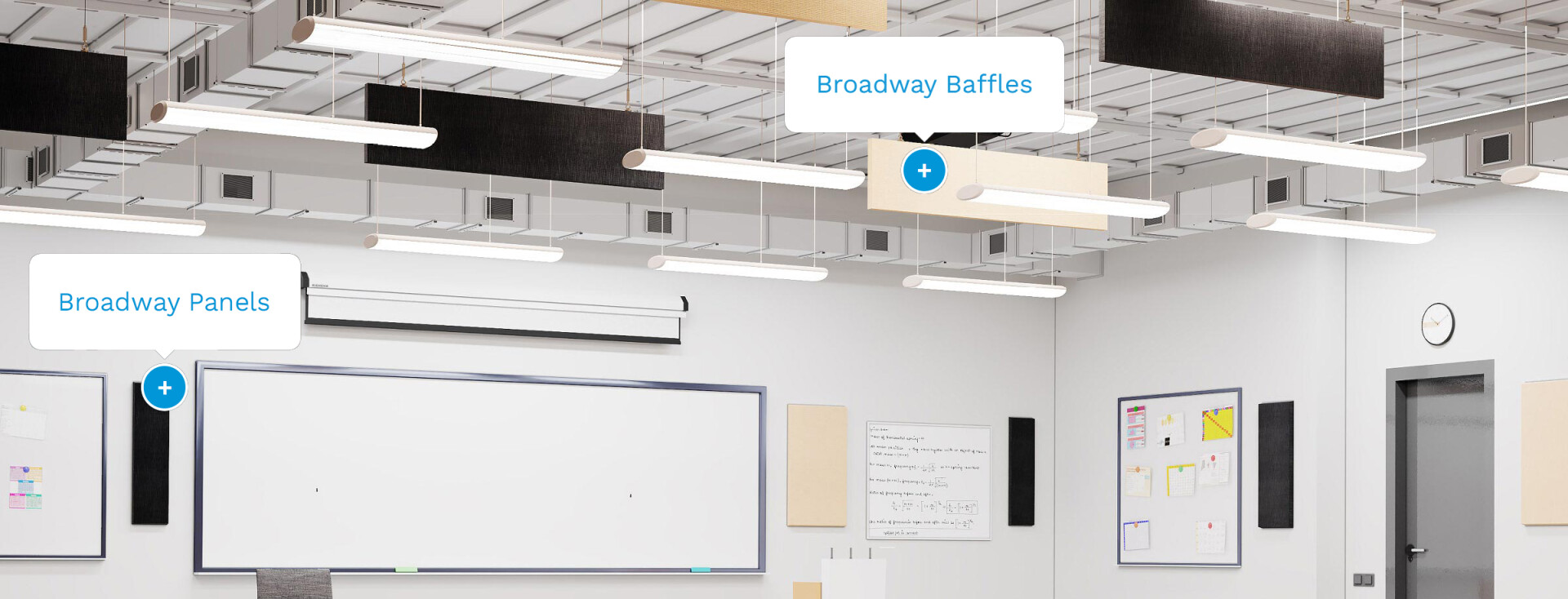
- Ceiling Tiles or Baffles: Install throughout the space to absorb ambient sound and reduce reverberation across large areas.
- Wall Panels: High-NRC absorbers placed strategically around the room help control reflections and enhance speech clarity.
- Sound Masking Systems: Introduce a low-level ambient “hush” sound that reduces the intelligibility of distant conversations, improving speech privacy.
Result:
A calmer and more controlled soundscape that lowers stress and improves call quality. Staff experience less fatigue and higher focus, resulting in better performance and overall productivity across the floor.
6. Reception Areas & Lobbies
Professional acoustics for a positive first impression
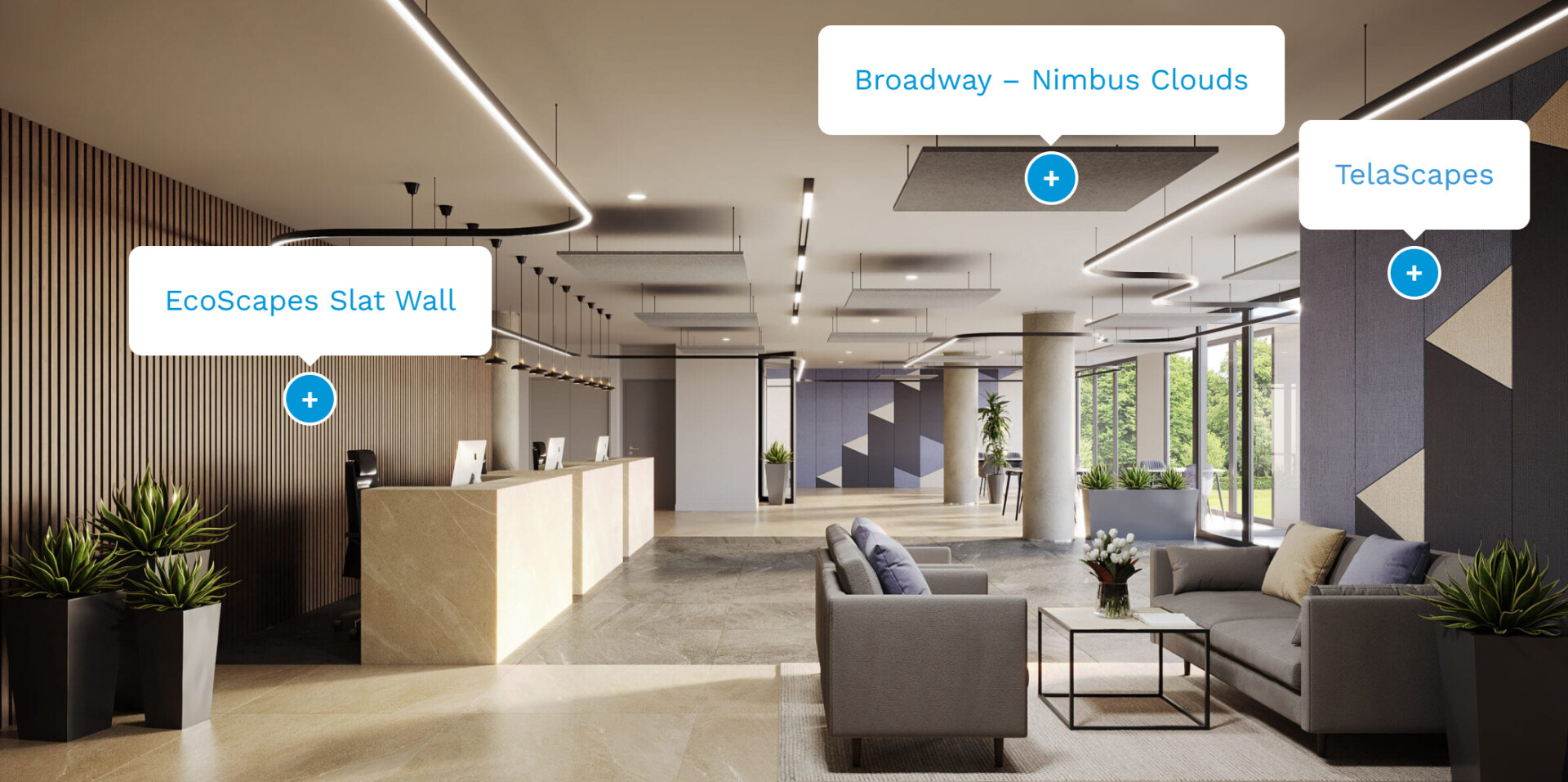
In reception areas and lobbies, large open spaces with hard surfaces such as glass, marble, or metal often create long echoes, making the environment noisy and acoustically harsh. Conversations can become difficult to understand, and background noise can carry throughout the space, disrupting both staff and visitors.
Excessive reverberation in these areas not only reduces speech clarity but can also contribute to a poor first impression, making the space feel less welcoming and professional.
Solutions:
- Ceiling Clouds: Floating acoustic absorbers that complement modern design aesthetics while controlling reflections and echo.
- Decorative Wall Panels: Printed or custom-coloured panels that absorb sound and double as a branding or design feature.
- Soft Furnishings: Incorporate upholstered seating and rugs to further dampen noise and create a more inviting space.
Result:
A professional and calm acoustic environment that gives a strong first impression and ensures clear, comfortable conversations at the reception desk. Visitors experience a welcoming atmosphere that reflects well on the organisation.
4 Ways To Improve Conference Room Acoustics