beyerdynamic
Transparency Mode in Headphones – Explained
Modern headphones offer much more than just great sound. One of the most exciting features is what’s known as transparency mode – especially useful in everyday life when you want to stay aware of your surroundings without compromising on audio quality. In this article, you’ll learn how transparency mode works, what benefits it offers, and how it differs from active noise cancelling.
WHAT IS TRANSPARENCY MODE?
Transparency mode is a feature in headphones that deliberately allows ambient sounds to pass through. Instead of completely isolating you from your surroundings, transparency mode in headphones ensures that you can still hear important sounds – such as announcements, conversations or traffic. This is especially useful in everyday life, for example when commuting, at the office or walking through the city.
Headphones with transparency mode use built-in microphones to capture external sounds and relay them to your ears in real time via the speakers. This keeps you alert without having to take off your headphones. Ideally, it creates the impression that the headphones are acoustically transparent – hence the name “transparency mode”.

HOW DOES TRANSPARENCY MODE WORK IN HEADPHONES?
Technically, transparency mode is based on the same microphones used for active noise cancellation (ANC). The difference: instead of suppressing external noise, it deliberately amplifies it and feeds it into the audio signal.
This happens in real time and with such precision that you barely notice you’re wearing headphones. Premium models focus on delivering the most natural possible reproduction of your surroundings – a technically demanding challenge. The AVENTHO 300 rises to this challenge: its transparency mode is designed to make the outside world sound authentic and unaltered – for a particularly clear and balanced soundscape that blends seamlessly into your environment.
BENEFITS OF HEADPHONES WITH TRANSPARENCY MODE
Headphones with transparency mode allow you to perceive ambient sounds and audio content at the same time – without having to switch between them.
Safety in traffic:
You can hear approaching cars, bicycles or warning signals.
Communication without removing headphones:
Brief conversations with colleagues or at the supermarket are no problem.
Everyday comfort:
Stay connected to your surroundings without compromising on sound quality
Flexibility:
Many models allow you to switch between transparency mode and noise cancellation – depending on the situation.

DIFFERENCES IN HEADPHONES
Transparency Mode vs. ANC
Both features use microphones but pursue opposite goals:
TRANSPARENCY MODE
Goal: Make ambient sounds audible
Effect: You consciously and naturally perceive your surroundings
ACTIVE NOISE CANCELLING (ANC)
Goal: Block out ambient sounds
Effect: You fully immerse yourself in your music or podcast and disconnect from your environment
While ANC is ideal for focused work or travel, transparency mode is perfect for situations where you want to stay alert.
Transparency Mode vs. Adaptive Mode
Some headphones also offer an adaptive mode. This automatically adjusts to your environment – for example, by switching between ANC and transparency mode depending on how loud or quiet it is around you.
TRANSPARENCY MODE
Deliberately lets ambient sounds through
ADAPTIVE MODE
Automatically detects ambient noise and dynamically adjusts the listening mode
Adaptive mode is especially useful if you’re on the move a lot – such as commuting or travelling – and don’t want to switch manually all the time.
BEYERDYNAMIC HEADPHONES WITH TRANSPARENCY MODE

AVENTHO 300
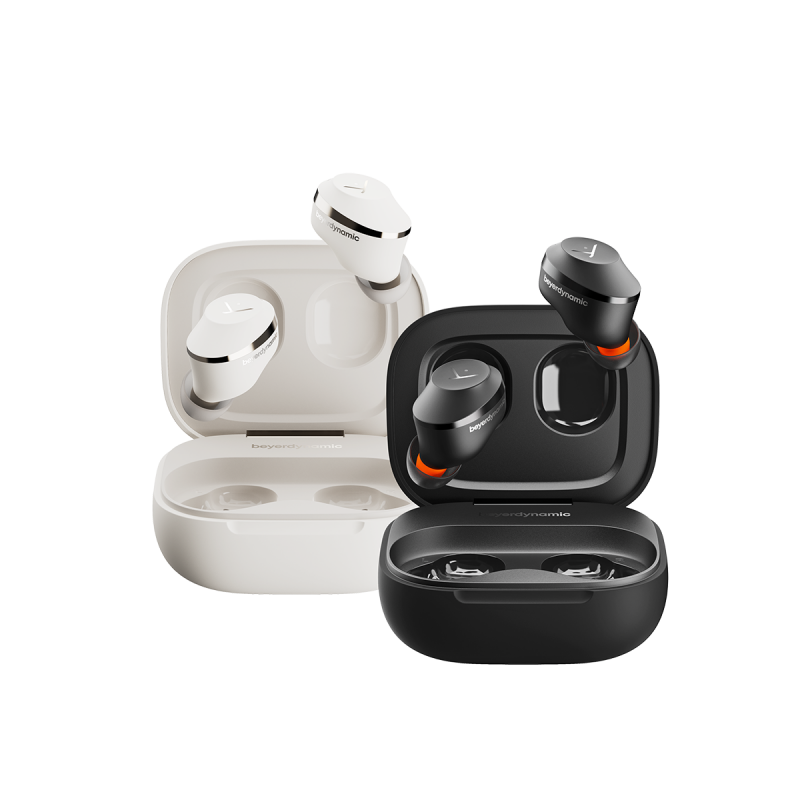
AMIRON 300

AMIRON 100
CONCLUSION
Transparency mode is a true comfort feature of modern headphones. It ensures you can stay aware of your surroundings without sacrificing sound quality. Especially when combined with ANC and adaptive modes, headphones with transparency mode offer maximum flexibility for your everyday life.
So if you’re looking for headphones with transparency mode, it’s worth taking a look at our models like the AVENTHO 300 or the AMIRON in-ear series.