Xilica Case Study
DELHI HIGH COURT
Delhi’s highest court benefits from increased clarity, unified communications capabilities and voice-lift in new building.
SOLUTION BENEFITS
- Small form-factor audio products keep equipment hidden in-room and eliminate need for centralized datacenter space.
- Clear communications assured through integrated noise reduction technologies in each Xilica processor.
- HearClear AEC enables unified communications platforms, such as Cisco WebEx, to be deployed for remote sessions.
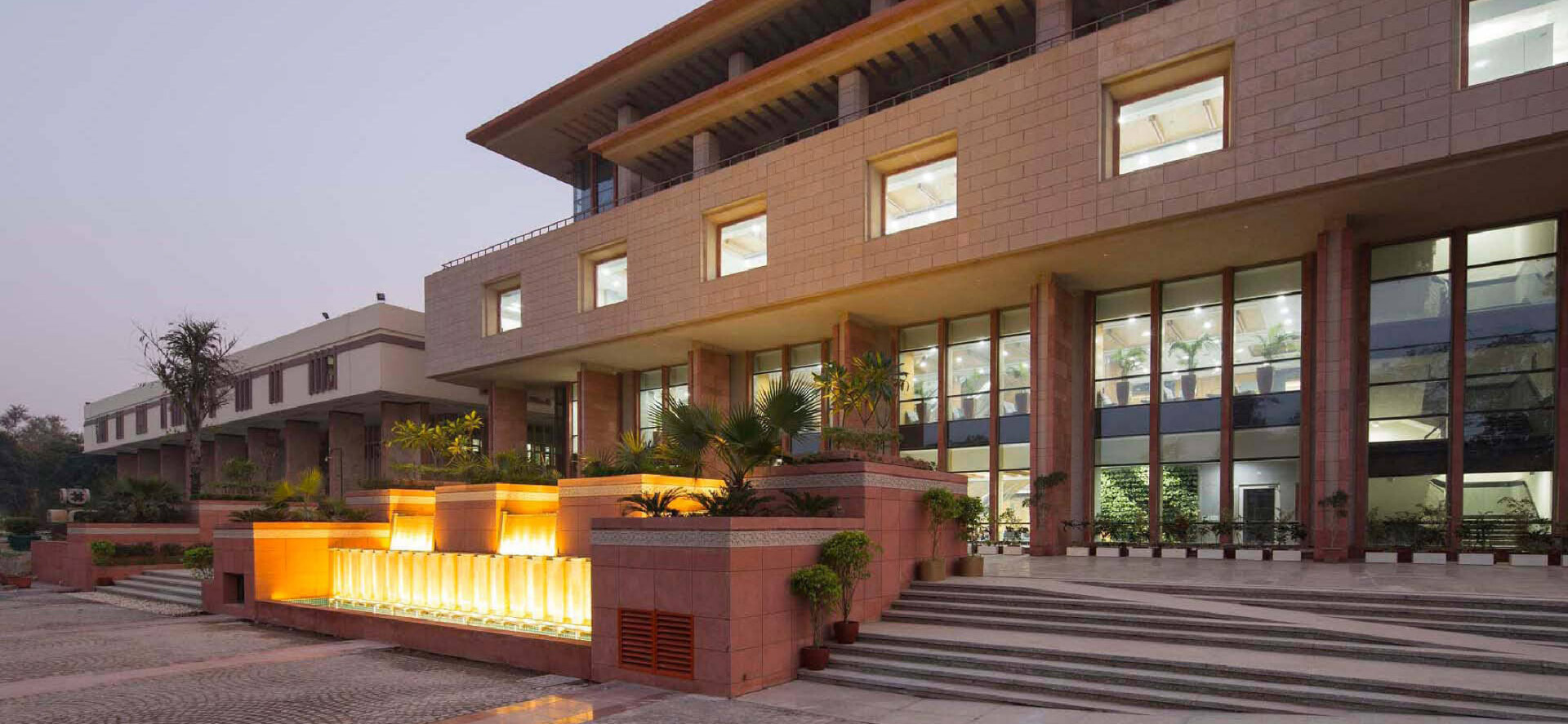
Adapting to a rising case-load from an ever-growing city, the Delhi High Court underwent a multimillion dollar expansion in 2020, with the addition of a new, architecturally-stunning wing comprising an additional 18 courtrooms for its 45 judges.
With the much-lauded new construction, the Ministry of Law and Justice took this opportunity to overhaul site-wide audio-visual systems across the Court, comprising 36 courtrooms, individual chambers, public spaces and office facilities.
Challenge
The Ministry was seeking an IT-friendly solution that would enhance the clarity of audio, both spoken testimony and multimedia evidence playback, in each courtroom. The building required secure, enterprise-grade AV infrastructure that operated on a dedicated network, with local components in each of the 36 spaces being physically independent of another. The system would need to provide a low total-cost-of-ownership (TCO) by being capable of expansion and evolution as the court facilities continued to grow, or additional technology became required.
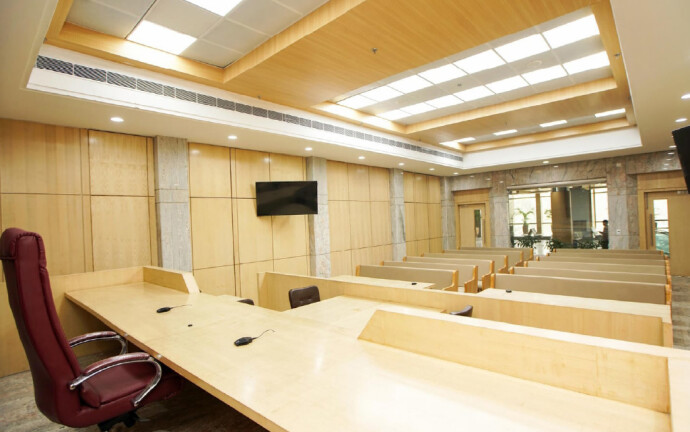
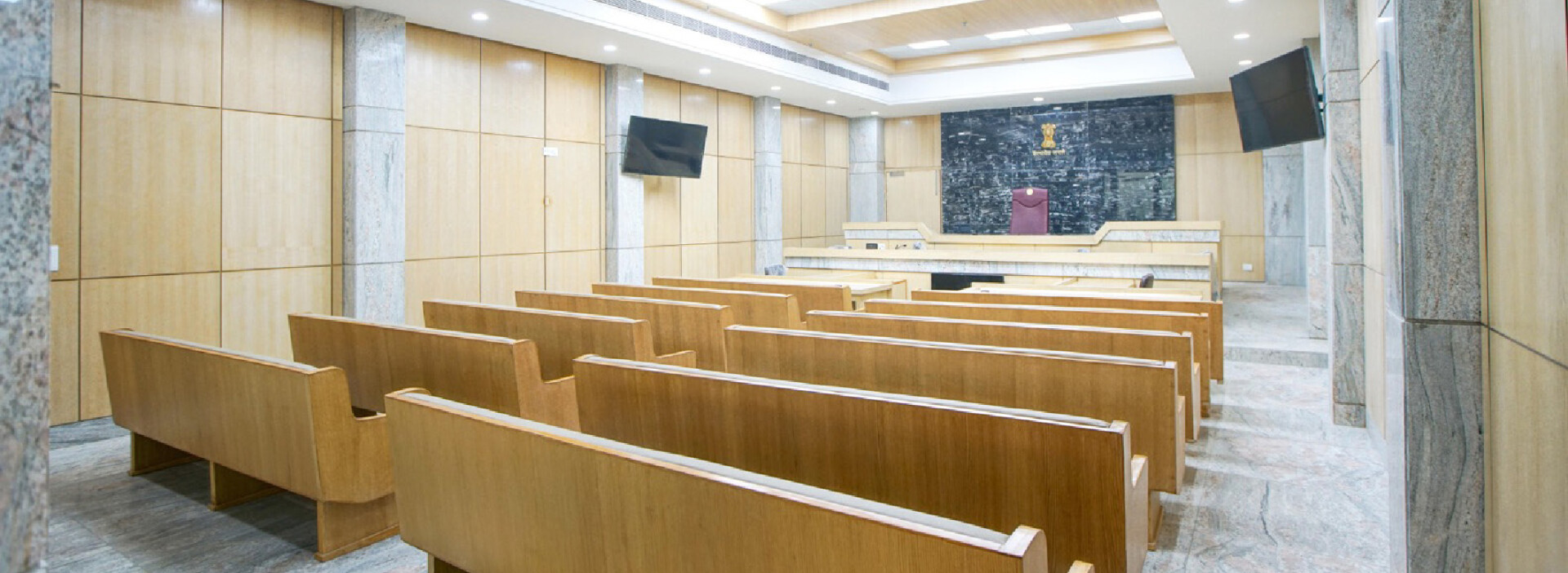
Both new and existing Crestron and AMX systems required integration with the solution, and the chosen system had to be capable of supporting unified communications applications, such as Cisco WebEx, as remote participation and evidence-sharing become more commonplace. Acoustic echo cancellation, noise reduction technologies and status sync over USB were a must, especially as the courtroom spaces were highly reverberant and constructed with a mix of wood and marble.
Solution
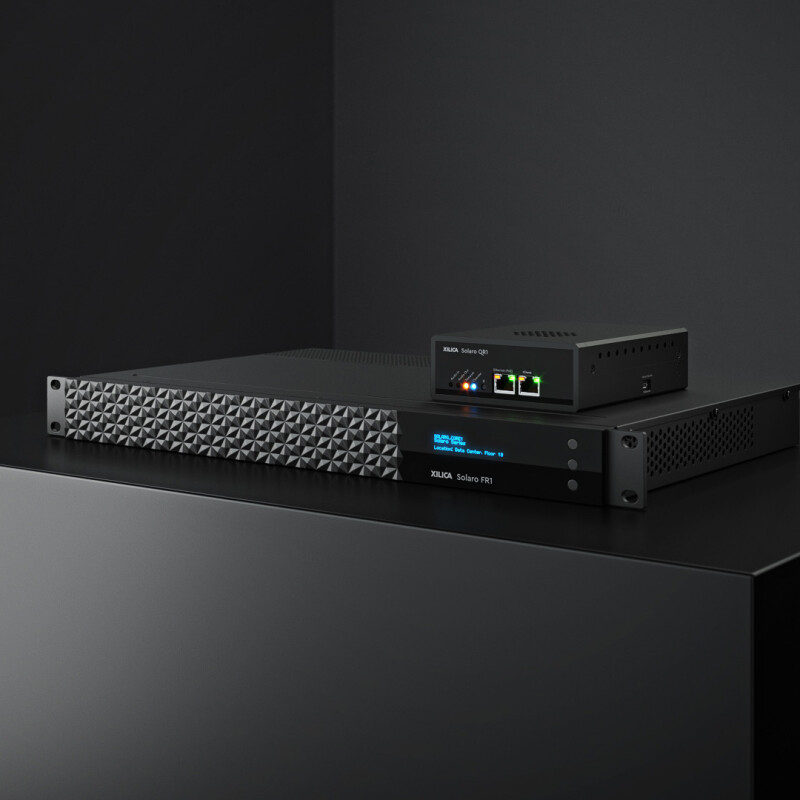
In each courtroom, a Xilica Solaro QR1 mounts discreetly in the room using integral brackets and processes audio to reduce noise, artefacts and echo. Sennheiser microphones located around the space, including boundary and gooseneck depending on the room size, feed back over traditional analog cable.
With the Solaro QR1’s integrated 4×4 Dante, rooms can be connected together for overflow or expansion using a dedicated Dante network, while the QR1’s separate data port enables control of the processor over the facility’s standard IT Cat5 network.
With a card-based I/O, Solaro QR1 enables the court to continue to expand their capabilities as requirements change and evolve. Today, the QR1s are populated with analog audio cards and USB, but as additional functionality is desired, a wide range of other connectivity can be added in. HearClear AEC can be enabled to process a feed from unified communications applications such as Cisco WebEx, enabling remove evidence presentation and testimony from another court, government facility or prison without transportation.

Impact
With heavy architectural praise, Delhi High Court’s new building has eliminated cumbersome AV racks and visible equipment that disrupts the space. Additional capabilities for soft-codec conferencing have been added, while the intelligibility has been improved, despite a range of construction materials that increase reverberation. The Ministry’s IT department, which oversees system management, is able to clearly and confidently access all devices over its standard network, while AV traffic occupies a dedicated Cat5 network that helps ring-fence content and increase security. As the court continues to expand and grow in the years to come, the modular technology of Xilica’s Solaro Series will enable Delhi High Court to painlessly add additional functionality without the need to ‘rip-and-replace’.
“IT departments are increasingly responsible for maintaining shared AV systems, and the rapid expansion of networked technologies means that IT and AV operations are inevitably moving closer to one another”
—Anshuman Dubey, Product Manager Business Communications, Sennheiser India
Products Used For This Solution